RAINY`S BEADHEAD HARE'S EAR - NATURAL #16
One of the most dependable and widely used nymphs ever tied. This classic pattern imitates a broad range of aquatic insects — from mayfly nymphs to caddis larvae — making it a must-have in any trout angler’s fly box. The added gold bead head not only helps the fly sink quickly into the strike zone but also adds a subtle flash that draws attention in deeper or stained water.
Tied with a natural hare’s mask body, this pattern offers a buggy, lifelike texture that perfectly mimics the look of real nymphs. Whether used alone, under a dry fly, or as part of a two-nymph rig, it consistently produces fish in all types of water.
Key Features:
Classic all-purpose nymph pattern
Gold bead head for fast sink rate and flash
Spiky hare’s mask dubbing adds natural movement and realism
Effective year-round in rivers, streams, and lakes
Works well as a lead or dropper fly in nymph rigs
Recommended Use:
Fish it in sizes 12–18, dead-drifted near the bottom or under an indicator. Ideal for prospecting or matching general mayfly and caddis activity.
Original: $2.99
-65%$2.99
$1.05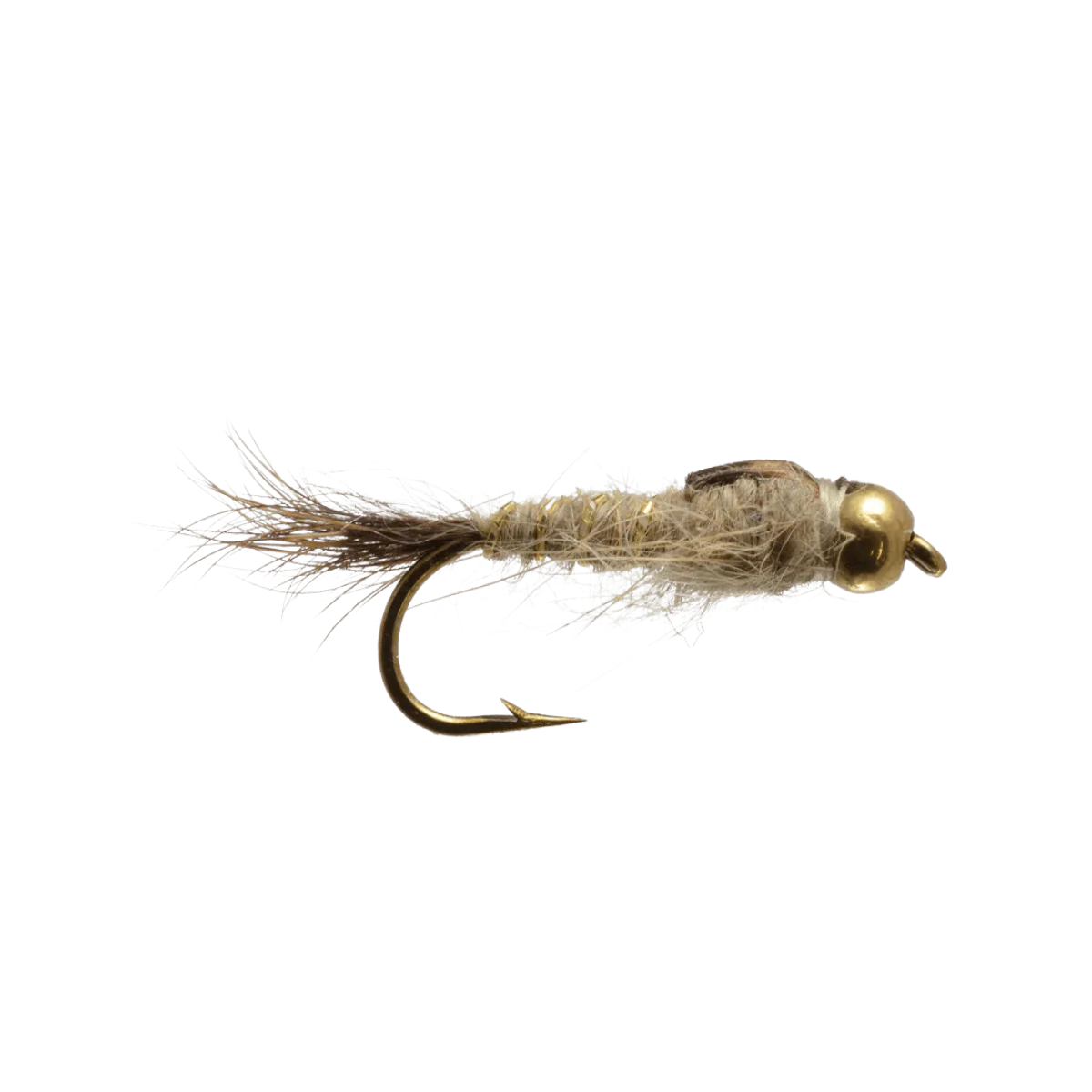
Description
One of the most dependable and widely used nymphs ever tied. This classic pattern imitates a broad range of aquatic insects — from mayfly nymphs to caddis larvae — making it a must-have in any trout angler’s fly box. The added gold bead head not only helps the fly sink quickly into the strike zone but also adds a subtle flash that draws attention in deeper or stained water.
Tied with a natural hare’s mask body, this pattern offers a buggy, lifelike texture that perfectly mimics the look of real nymphs. Whether used alone, under a dry fly, or as part of a two-nymph rig, it consistently produces fish in all types of water.
Key Features:
Classic all-purpose nymph pattern
Gold bead head for fast sink rate and flash
Spiky hare’s mask dubbing adds natural movement and realism
Effective year-round in rivers, streams, and lakes
Works well as a lead or dropper fly in nymph rigs
Recommended Use:
Fish it in sizes 12–18, dead-drifted near the bottom or under an indicator. Ideal for prospecting or matching general mayfly and caddis activity.